How to Choose the Right Car in India: Petrol vs Diesel vs CNG vs EV (2025 Guide)
Learn how to choose the right car in India. Compare petrol vs diesel vs CNG vs EV, calculate running cost, check safety ratings, and use our car selector to pick the best vehicle for your driving pattern.
Introduction
Choosing the right car is more than a style decision — it affects your monthly running cost, comfort, safety and long-term ownership experience. This guide helps you pick the correct vehicle type based on real driving patterns, monthly kilometres, road conditions and fuel type (petrol, diesel, CNG, EV).
Know Your Driving Pattern: City, Highway or Both?
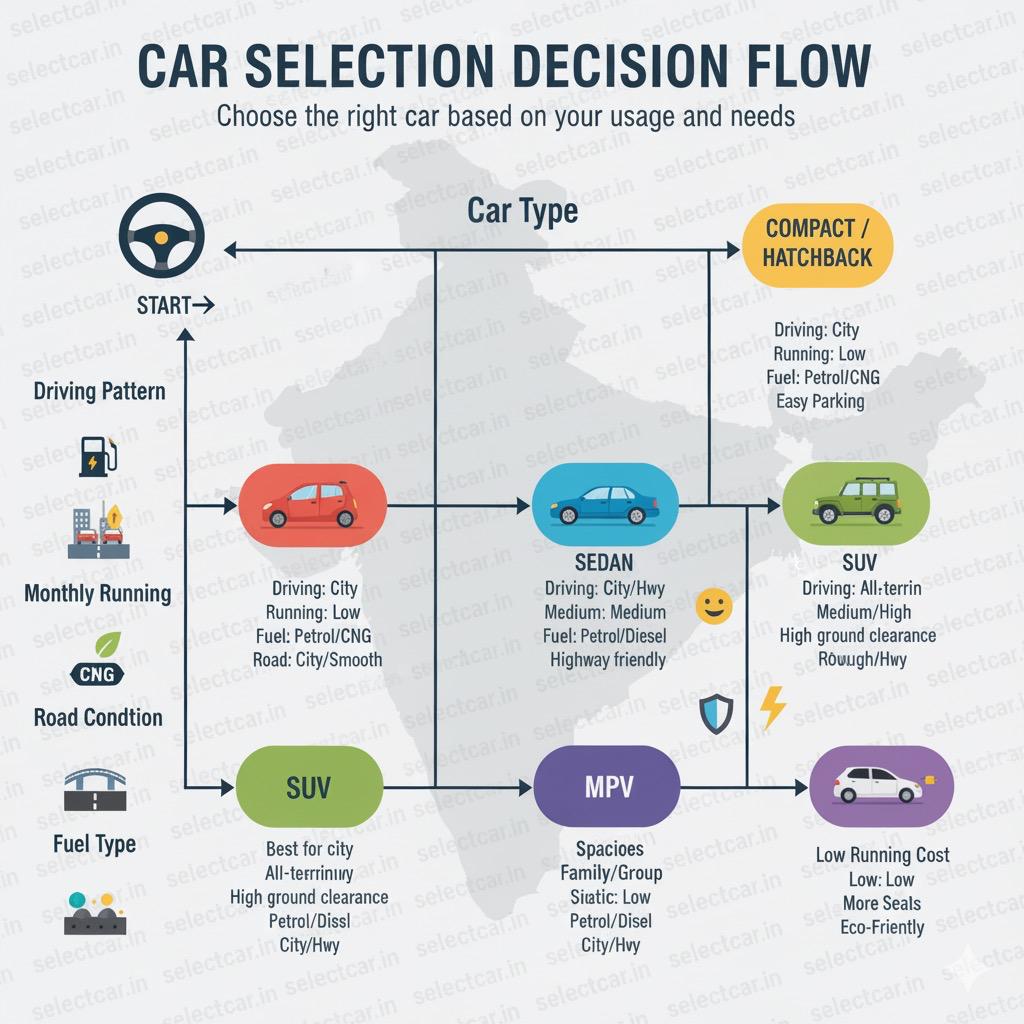
Start by being honest about where you drive most. City driving (stop-and-go traffic) favors compact, maneuverable cars with efficient engines and automatic transmissions. Highway driving requires stable high-speed handling, comfortable seats and a torquey engine. If you split time between both, choose a versatile car with balanced suspension and good mid-range performance.
Monthly Running: The Most Important Number
Estimate your average monthly kilometres. This single number steers your fuel-type decision:
- Low running (<800 km/month): Petrol cars are often most practical.
- Medium running (800–1500 km/month): Petrol or CNG can be economical.
- High running (>1500 km/month): Diesel or EV (if charging is convenient) usually offer the lowest cost per km.
Fuel Choices — Quick Comparison (Petrol, Diesel, CNG, EV)
Petrol: Refined, lower purchase cost, ideal for city users.
Diesel: Better highway efficiency and torque; suited for long-distance and load-carrying use.
CNG: Lowest running cost and cleaner combustion, but reduced boot space and station availability can be constraints.
EV: Zero tailpipe emissions, very low running cost and minimal maintenance; ideal for urban/suburban users with reliable charging (home/work).
Road Conditions & Comfort Features
Match ground clearance and suspension to your roads. For rough or semi-urban roads, prioritise higher ride height and stronger suspension. For long highway travel, prioritise seat ergonomics, cruise control, and low cabin noise. Safety features (ESC, ABS, multiple airbags) are mandatory considerations regardless of segment.
Total Cost of Ownership (TCO): A Simple Framework
Don't focus only on the sticker price. TCO includes purchase price, fuel/energy cost, maintenance, insurance and expected resale value. We recommend a 5-year view — it reveals how different powertrains compare in real life.
Environmental Impact & Sustainability
If reducing your carbon footprint matters, consider CNG, hybrid or EV options. EVs are the cleanest at the tailpipe; their lifecycle impact improves with renewable electricity and better battery recycling programs.
How to Decide — A Practical Checklist
1. Determine monthly running and primary use (city/highway).
2. Check local fuel & electricity prices and charging availability.
3. Evaluate safety ratings and basic ADAS features.
4. Do a comprehensive test drive using a checklist (engine response, braking, comfort, noise).
5. Calculate 5-year TCO and compare choices.
6. Choose the vehicle that best balances comfort, safety and economy for your use.
Call to Action — Use the Selectcar.in Car Selector
Find your perfect match faster — use our Car Selector tool on Selectcar.in to get personalised recommendations based on your driving pattern, budget and priorities. [Placeholder for selector tool link].
FAQ — Common Questions (SEO-friendly)
Quick Fuel Cost Example (Illustrative)
| Fuel Type | Assumed Mileage | Price | Monthly Cost (1000 km) |
|---|---|---|---|
| Petrol | 15 km/l | ₹110/l | ₹7,333 |
| Diesel | 20 km/l | ₹95/l | ₹4,750 |
| CNG | 28 km/kg | ₹80/kg | ₹2,857 |
| EV | 6 km/unit | ₹8/unit | ₹1,333 |
Find Your Perfect Car — Fast
Use the Selectcar.in Car Selector to receive personalised vehicle recommendations based on your monthly running, budget, and priorities.
Go to Car Selector Answer a few simple questions — get tailored suggestions
Frequently Asked Questions
Which is better for city driving: petrol or diesel?
For city driving, petrol is generally better due to smoother operation, lower upfront cost, and fewer issues with short trips. Diesel engines are more efficient on highways and for high-mileage users.
Is an electric car worth it in India?
An EV is worth it if you have reliable access to charging at home or work and your daily range needs fall comfortably within the vehicle's range. Consider local charging infrastructure and electricity costs.
How do I calculate running costs for different fuels?
Estimate your monthly kilometres, divide by the vehicle's mileage (km/l or km/unit), then multiply by local fuel or electricity price. Appendix A in our detailed guide on Selectcar.in shows an example calculation.
What safety features should I prioritise?
Prioritise structural safety (NCAP rating), multiple airbags, ABS with EBD, and Electronic Stability Control (ESC). ADAS features like automatic emergency braking and lane-keep assist are valuable additions.
Are hybrids a good compromise between petrol and EV?
Yes. Hybrids reduce fuel consumption and emissions without requiring external charging, making them a practical transitional solution where EV infrastructure is limited.
Is CNG a good option for long-term ownership?
CNG offers low running costs and cleaner combustion, but check local refuelling availability and accept reduced boot space. For predictable daily routes, it's an economical choice.